In today’s interconnected world, the voices of justice and human rights are louder than ever. Local Mercenaries working for repressive regimes face increasing global condemnation. On July 27, 2024, the Iranian regime brutally executed two innocent citizens for supporting the Iranian Mojahedin (MEK). This act drew strong criticism from human rights organizations, international figures, and the UN High Commissioner for Human Rights. Concurrently, a dozen American and European countries, including Albania, issued warnings about Tehran’s terrorist activities. These reactions reflected the regime’s growing isolation.
Amid global outrage, an unusual voice emerged from Durrës, Albania. Gjergji Thanasi, known for his eccentric and disturbing views, not only failed to condemn the executions but welcomed them. Thanasi, along with others like Aldo Sulollari and Olsi Jazexhi, openly supports the Iranian regime’s crimes. While Jazexhi, despised in Albania, has moved to Malaysia, these men remain active in Albania, spreading propaganda against Iranian Mojahedin in service of a discredited regime.
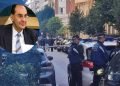
 Gjergji Thanasi
The Pawns of Propaganda: A Motley Crew of Useful Idiots
Figures like Thanasi and Sulollari are neither prominent nor respected in Albanian society. In fact, Sulollari was expelled from an Albanian TV station in the USA for promoting Iranian regime propaganda. Their activities are financed by Tehran, enriching them while reducing their influence to mere stage performances.
Old photographs of Sulollari show a marked physical transformation after aligning with the regime. This change suggests a financial and lifestyle shift funded by foreign influence. It highlights how easily some individuals are tempted into becoming willing agents of oppression.
 Aldo Sulollari
 Ela Deda
Recently, Sulollari staged a so-called exhibition at the “Villa Sara” in Tirana the event was designed as a propaganda video for Iran’s secret police (MOIS), targeting Iranian political refugees in Albania. Sulollari filmed and abused the locals in anti-Mojahedin campaigns in the websites managed by the Iranian regime’s secret police.
The Iranian regime also used Ela Deda, who allegedly has a history at the Tirana Mental Hospital, to spread false claims about Ashraf 3 residents. This fact reveal the regime’s willingness to exploit the vulnerable and marginalized in its desperate search for allies.
A Vicious Cycle of Deception and Desperation
Some believe Sulollari is simply deceiving Tehran’s MOIS, pretending his low-quality propaganda is effective to secure payment. Others argue the regime is fully aware of his limited influence, but still uses him as a “useful idiot” to execute minor propaganda stunts.
This dynamic reflects a cycle of mutual exploitation. The regime gains minor content to feed its internal propaganda machine, while these individuals receive payment for their loyalty.
The Ultimate Isolation: A Regime’s Desperate Act
The activities of Thanasi, Sulollari, and Jazexhi reveal the Iranian regime’s utter failure in Albania. In a nation of millions, they have recruited only a few marginalized voices.
Their lack of influence underscores the regime’s complete inability to shape public opinion. This handful of Local Mercenaries stands as a symbol of desperation, a final attempt to appear relevant.
Their existence confirms the Iranian regime’s global isolation and its reliance on the weakest of allies.
FAQs
- Who are the Iranian regime’s Local Lackeys in Albania?
They are individuals who promote Iranian regime propaganda in Albania, including Gjergji Thanasi, Aldo Sulollari, and Olsi Jazexhi. - Why are they called Local Lackeys?
They serve foreign political interests in exchange for financial gain, acting against Albania’s national sentiment. - What role does propaganda play in their activities?
They organize small events and produce media content designed to discredit Iranian opposition , The Mojahedin in Ashraf3 in Albania. - What is Ashraf 3?
Ashraf 3 is a settlement in Albania housing Iranian political refugees opposed to Tehran’s regime.