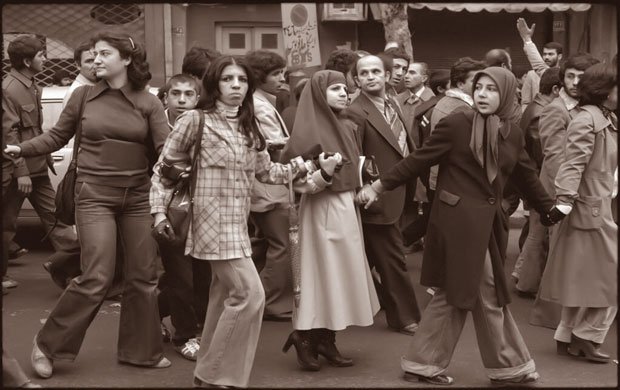
“Iranian Women’s Fight for Freedom: The Dawn of the Constitutional Revolution”
Over the past 120 years, the women’s movement in Iran has endured profound ups and downs, yet Iranian women have relentlessly pursued freedom amid adversity. This movement truly ignited during the Constitutional Revolution against despotism around 120 years ago, coinciding with widespread oppression and poverty under tyrannical rule. On one side stood the despotic regime; on the other, rigid religious edicts imposed by certain clerics, fostering a patriarchal society where both women and men were deprived of basic rights.
Freedom-seeking women embraced democratic ideals. To grasp the essence of this movement, one must consider Iran’s historical context. During Fath-Ali Shah’s era and beyond, defeats in wars with Russia and territorial losses deeply affected patriots, while British imperial interests further complicated political dynamics. Even before the Constitutional era, women participated in social uprisings driven by economic hardships and famine, sparking thoughts of rebellion.
Zeynep Pasha led the resistance against domestic tyranny
Initially, some women joined streetside protests to support anti-despotic clerics, but their efforts soon evolved into independent actions. About 130 years ago, Zainab Pasha spearheaded armed resistance against internal tyranny, foreign colonialism, and gender inequalities. Under her leadership, thousands mobilized, storming markets in defiance. The regime responded with gunfire, resulting in several fatalities during the clashes.
The Constitutional Revolution of 1906 aimed to establish freedom, justice, and the rule of law. In 1906 (1285 solar calendar), Muzaffar al-Din Shah yielded to public pressure, granting partial victories. However, conspiracies and oppression persisted. Women’s lives were excruciatingly harsh: they were bought and sold like commodities, female education was demonized as un-Islamic, literacy among women was deemed shameful, and social participation was forbidden.
Tahera Qurat al-Ain, a poet and activist writer who bravely challenged the mandatory hijab
Amid repression, women’s political organizations emerged. Monarchs, desperate to cling to power, granted clerics extensive authority, enabling their societal dominance. Clerics attempted to revert women to traditional roles, but these efforts failed. During monarchical despotism, heroic women like Bibi Maryam Bakhtiari—known as the People’s Commander—played pivotal roles in conquering Tehran. She commanded male fighters, hosted Dr. Mohammad Mossadegh during coups, and battled Mohammad Ali Shah’s Cossacks and British colonialists.
Other trailblazers included Tahereh Qorrat al-Ayn, a militant poet and writer who defiantly removed her mandatory veil in opposition to the mullahs, only to be executed through a collusion of reactionary forces and colonial powers. Countless other valiant women founded secret societies, such as Sedigheh Dowlatabadi and Shams ol-Moluk Javaheri. Bibi Khanum Astarabadi established girls’ schools, while Qamar ol-Moluk not only shone in music but also combated despotism and inequality. She shattered women’s historical silence, using art as a weapon for change. Under Reza Shah’s oppressive shadow, Qamar chose to perform for the people rather than the court, donating earnings to aid the poor and prisoners.
Maryam Rajavi as a key leader in the modern stage
These women mirror Iran’s social, cultural, and political transformations across eras. During Mohammad Reza Pahlavi’s reign, diverse women—from leftists and nationalists to Mujahedin—stood firm, sacrificing their lives for freedom. Figures like Fatemeh Amini perished under SAVAK torture, while Ashraf Rajavi endured years of royal imprisonment and post-1979 violence, facing execution in 1981.
In the 1979 Revolution, women played crucial roles, yet post-victory, they faced brutal suppression by misogynistic clerics, with tens of thousands tortured or executed. Undeterred, the movement persisted. Maryam Rajavi emerged as a key leader in the modern phase, presenting a ten-point plan for a post-mullah Iran. Through international networks in culture, politics, and media, she garnered support from global figures. Her speeches in parliaments and forums advocate for international pressure on Iran’s human rights violations and the abolition of death penalties.
Women’s freedom: the ultimate key to Iran’s liberation
Rajavi urges Western governments to recognize Iran’s resistance as a non-military alternative, rather than invasion. She vows to fight until the current regime—blamed for terrorism, warmongering, and poverty—is overthrown. A staunch advocate for gender equality, she elevates women to leadership positions, organizing the movement on political and global scales. She believes women’s liberation is the ultimate key to freeing Iran from the grip of misogynistic mullahs.
By: Mirza Maleki